Digital Ortho Photos of Ice free Greenland from existing Satellite imagery 2020

Why is it important?

Topographic maps of Greenland are generally outdated, and the positional accuracy often inadequate, in the open land outside the main settlement areas.

This means that critical decisions relevant for public administration and environmental regulation are often based on inadequate data and information, thus impeding the ability of authorities to make informed and data driven decisions rooted in the best possible data.

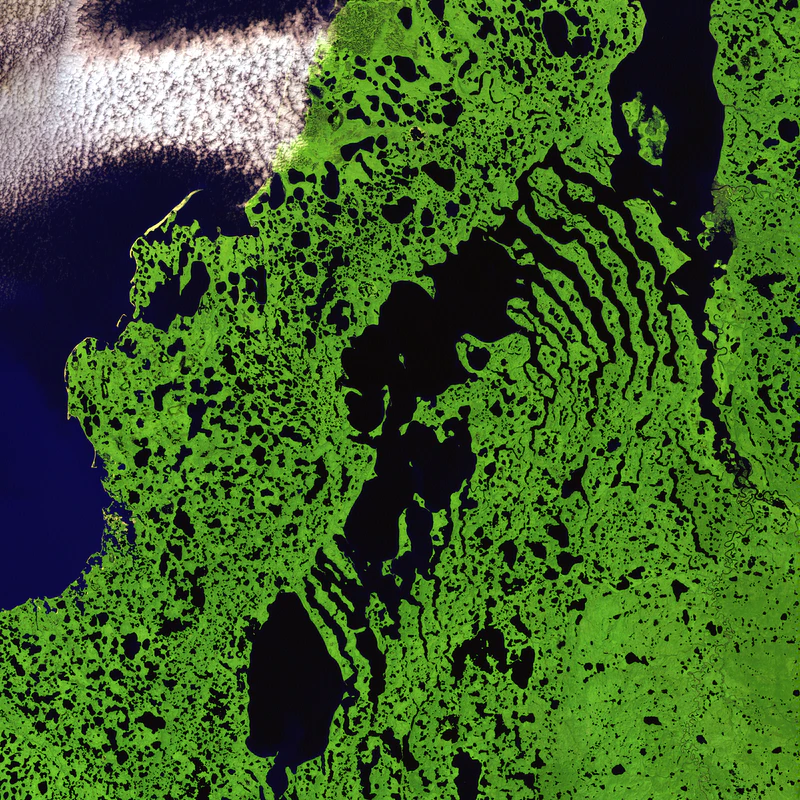
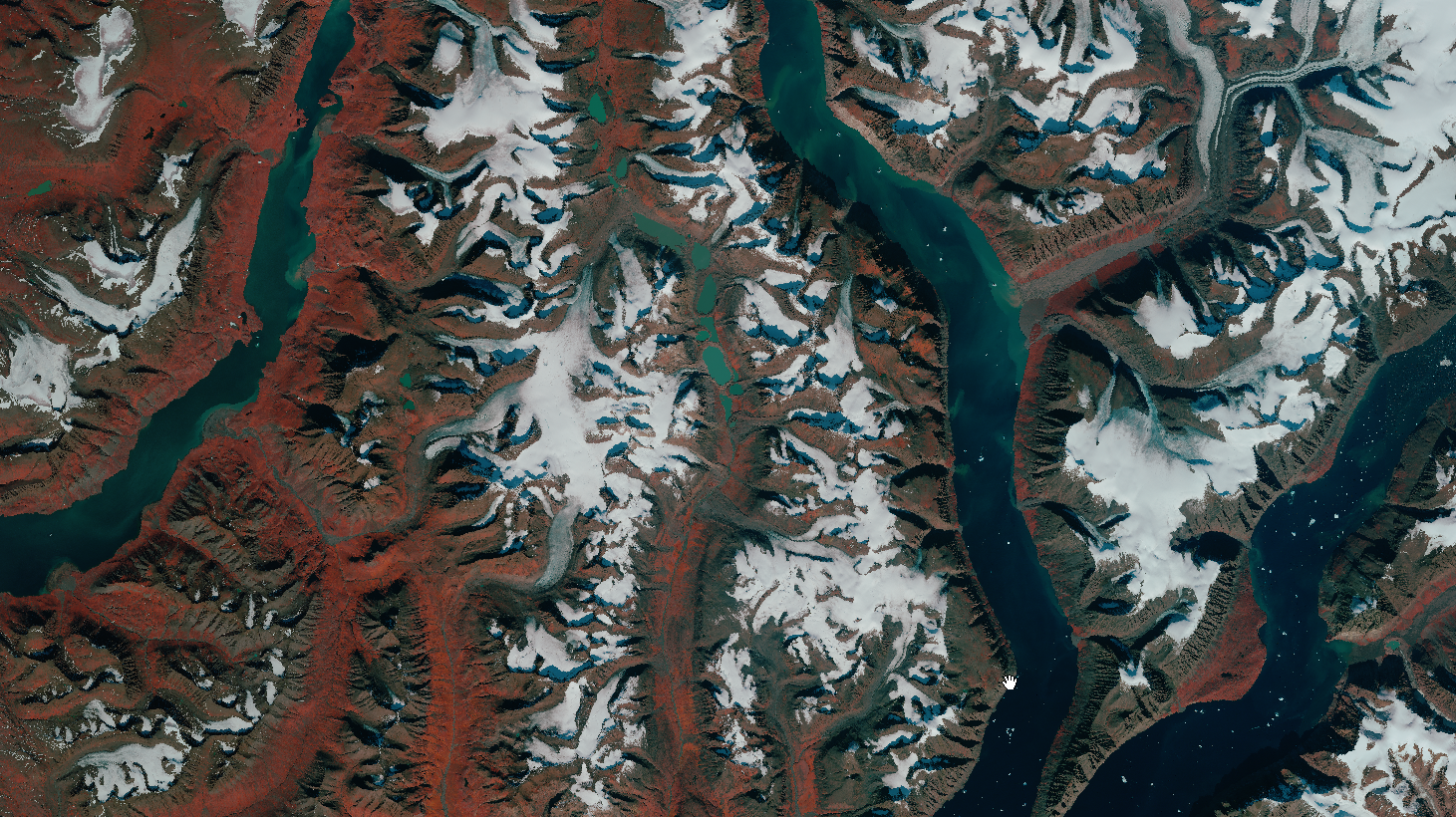
The new up to date orthophoto mosaics based on the latest satellite imagery from the Airbus Spot 6/7 satellites will contribute to address this gap by providing a fresh view of the ice-free areas of Greenland.

Project highlights:

Provision of very high resolution satellite imagery covering 225.000 km2 of Greenland

Advanced large scale data processing to produce seamless cloud-free, orthorectified and color optimized image mosaics covering the entire 225.000 km2.

Independent advice and support on satellite data selection and processing, drawing upon more than 20 years’ experience

In more detail..

Since 2015, DHI GRAS has supported the Danish Agency for Data Supply and Efficiency (SDFE), in close cooperation with Greenland’s Government, in their mission to provide updated topographic maps of the ice-free areas of Greenland.

The current topographic maps of Greenland are based on data collected in the 1930s and 1970-80s and they are inaccurate both in terms of elevation, distance and geolocation. However, Greenland is a large country and combined with the extreme conditions, dark polar winters and frequent cloud cover makes it difficult and costly to map at scale through traditional means.

Through previous pilot projects (undertaken in collaboration with Airbus on behalf of SDFE), we have provided ready-to-use orthomosaics and detailed Digital Elevation Models (DEM) for an area covering 85.000 sqkm of Greenland, successfully demonstrating the viability and potential of satellite imagery as a solution to the existing data gap.

In this project (in collaboration with Airbus) we will deliver updated satellite ortho image mosaics for the majority of the ice-free areas of Greenland – covering an extent of more than 225.000 km2.

These new data, providing a fresh view of Greenland, will underpin efforts to update existing topographic maps, thus contribute to support informed decision making and make it easier and more secure to navigate in the vast Greenlandic nature.

In partnership with

Danish Agency for Data Supply and Efficiency:

The Danish Agency for Data Supply and Effeciency (SDFE) provides high-quality data to the public and private sectors, enabling them to make important community decisions on the best possible basis.

SDFE is an agency that spans broadly across public administration and is part of the Danish Ministry of Climate, Energy and Utilities.

Related items

Earth Observation Centre of Excellence part of the DHI GROUP

info@dhigroup.com
+45 4516 9200

Agern Alle 5,
2970 Hørsholm,
Denmark

CVR: 36466871

NextLand

Why is it important?

More efficient use of water, and other inputs, in agriculture is gaining importance with recent attention to sustainable resource use. By providing timely, accurate and field-scale information on the crop water use and crop water needs we can help farmers to optimize their practices with both economic and environmental benefits.

Project highlights:

Satellite data can be used to operationally produce potential and actual evapotranspiration maps.

Actionable information, such as crop water deficit, can be used by farmers to improve their irrigation practices.

NextLand store will allow easy access to produced maps through a modern user and machine-to-machine interfaces.

In more detail..

With the Copernicus Earth observation program reaching a mature stage, the time is right to develop operational commercial services based on this high-quality data. This is the aim on the NextLand project, with the focus on agricultural and forestry EO services. At DHI GRAS we have been developing advanced methods to estimate actual and potential evapotranspiration using data from the Copernicus Sentinel satellites and infer crop water needs based on this information. This is the expertise which we are bringing to the NextLand consortium. Through co-creation with selected group of agricultural alpha-users we will fine-tune our evapotranspiration-based products and offer a valuable tool for optimizing irrigation practices with benefits both to the farmers and the environment.

European Commission:

NextLand is funded by the European Union’s H2020 Programme for Research, Technological Development and Demonstration.

H2020 is the biggest EU Research and Innovation programme and a financial instrument aimed at securing Europe’s global competitiveness by driving economic growth and focusing on research as an investment for the future of Europe.

Earth Observation Centre of Excellence part of the DHI GROUP

info@dhigroup.com
+45 4516 9200

Agern Alle 5,
2970 Hørsholm,
Denmark

CVR: 36466871

Increasing Crop Water Use Efficiency at Multiple Scales Using Sentinel Evapotranspiration – ET4FAO

Why is it important?

With increasing pressure on fresh water resources, and up to 70% of those resources used in crop irrigation, it is important to monitor and improve crop water use efficiency from field to national scales.

Project highlights:

Evaporanspiration maps covering Lebanon and Tunisia were produced and are available from et4fao.dhigroup.com

Covering a wide range of metocean parameters with expert assessment of quality and only including sufficiently reliable data.

Robust scientific analysis of the new evapotranspiration products and maps available from WaPOR portal is conducted.

In more detail..

The Food and Agriculture Organization (FAO), the custodian agency of SDG indicators 6.4.1 and 6.4.2, is running a portal called Water Productivity Open-access portal (WaPOR) to encourage the use of satellite data in crop water use efficiency monitoring. The WaPOR portal currently relies on Terra and Aqua, PROBA-V and Landsat satellite data, many of which are at the end of their expected lifetime. In this project we perform robust, scientific analysis of the possibility to use Copernicus data (especially observations from the Sentinel-2 and Sentinel-3 satellites) in place of the legacy satellites, to produce national maps of evapotranspiration able to capture field-scale crop water use.

The project builds upon methodologies developed during the ESA-funded Sen-ET project. During that project, a robust method was developed to estimate land-surface energy fluxes, including evapotranspiration, at field-scale using Sentinel-2 and Sentinel-3 data, despite the absence of a high-resolution thermal sensor in the Sentinel constellation. The method consisted of a machine-learning data fusion algorithm for sharpening land surface temperature measured by Sentinel-3 at 1 km to the 20 m spatial resolution of Sentinel-2, followed by a physically based modelling of land-surface energy fluxes. In ET4FAO we apply this technique to produce evapotranspiration maps covering the whole of Lebanon and Tunisia at 20 m, 100 m and 300 m spatial resolutions. Those maps are then compared against products available from the FAO WaPOR portal and validated against independent field measurements.

European Space Agency:

The project in funded by ESA as part of the EO Science for Society Open Call. It is a partnership between scientists from DHI GRAS and COMPLUTIG (Spain) with FAO acting as the main stakeholder.

Earth Observation Centre of Excellence part of the DHI GROUP

info@dhigroup.com
+45 4516 9200

Agern Alle 5,
2970 Hørsholm,
Denmark

CVR: 36466871

Marine vegetation mapping in Sweden

Why is it important?

According to the EU Habitat directive and the Marine Strategy Framework Directive, member states are required to map, monitor and evaluate changes in the quality and areal distribution of different marine habitats and biotopes. Submerged aquatic vegetation (SAV), in particular eelgrass, is one of the key indicators of ecological status and environmental state of water bodies, and therefore widely used in reporting related to these directives.

Project highlights:

Copernicus Sentinel-2 imagery, novel machine learning techniques and advanced data processing to create the first spatial overview of the distribution of SAV at national scale in Sweden.

A cloud-based web-application for Sentinel-2 based SAV mapping without prior specialist knowledge Input.

A training dataset constructed with more than 30 000 manually drawn polygons to build a robust machine learning model and predict nationwide SAV.

In more detail..

In 2020 we embarked on a project together with the Swedish regional and national authorities, to combine Copernicus Sentinel-2 satellite imagery, novel machine learning techniques and advanced data processing to create the first spatial overview of the distribution of SAV at national scale in Sweden. A training dataset constructed with more than 30 000 manually labelled polygons was used to build the classification model, with which more than 3800 km2 of the underwater habitats, of the entire shallow coastal zone of Sweden, was mapped. Applying Sentinel-2 imagery from 2019-2020, the resulting classification, in 10-meter spatial resolution, provides nationwide coverage and detailed insight into the status of aquatic vegetation in the shallow water areas of Sweden.

Moreover, in close coordination with the key stakeholders, we have developed a cloud-based web-application that enables individual counties along the Swedish coast to perform their own SAV mapping without prior specialist knowledge. This ties into a long-term objective of the counties in Sweden to easier comply with national monitoring and reporting requirements, and thereby for Sweden to better comply with international requirements at EU level.

The project outcome and methodologies are further described in the following peer-reviewed article:

Huber, Silvia. et al. (2021), Novel approach to large-scale monitoring of submerged aquatic vegetation: A nationwide example from Sweden. Integrated Environmental Assessment and Management.

Länsstyrelsen Västerbotten

Länsstyrelsen Västerbotten, on behalf of the Swedish Agency for Marine and Water Management.

Earth Observation Centre of Excellence part of the DHI GROUP

info@dhigroup.com
+45 4516 9200

Agern Alle 5,
2970 Hørsholm,
Denmark

CVR: 36466871

EO Clinic: Snow and Ice Mapping in Kazakhstan

Why is it important?

The snowpack and its spatial and temporal variability play an important role in the hydrological cycle and water resource management of Kazakhstan, since most rivers and streams are fed by snow melt, which is the main water source for the vegetation growing season. Snow stores a significant mass of water and knowledge about the extent and amount of water provides important input for hydrodynamic models and the management of natural hazards, such as flood events. River ice controls the winter flow regime of rivers and compromises the operation of hydrometric stations, governs the water intake and discharge activities of municipalities and businesses. Particularly during spring, break-up ice can create jams and floods that endanger infrastructure such as bridges. EO based information could feed into a near real time monitoring system to support informed decision making.

Project highlights:

Possibility for near real-time monitoring systems for ice jam detection.

Improved forecasting of snowmelt runoff to inform flood warning tools.

Input for hydrodynamic models for informed decision making.

In more detail..

The Committee on Water Resources of the Ministry of Ecology, Geology and Natural Resources and the Committee for Emergency Situations of the Ministry of Internal Affairs has appointed the Kazakh space agency (Kazakhstan Gharysh Sapary - KGS) to provide solutions to mitigate flood-related hazards and risks. The application of Earth Observation (EO) data is a very efficient and cost-effective way to support flood protection programs. EO’s strength lies in its large-area and high-temporal monitoring capabilities of the Earth’s surface - information of direct relevance to better understand the water dynamics, flood occurrence and finally inform hydrodynamic models to improve flood simulations.

Despite its importance, snow cover, one of the Essential Climate Variables, is often underrepresented in such models. Snow stores a significant mass of water and, with its high dynamic, has a strong effect on regional and global energy and water cycles. Information of ice dynamics can inform tools to monitor risk-prone areas in near real time such as ice jams along rivers that potentially endanger infrastructure or provoke flooding.

In this project, DHI GRAS provided the following five products to KGS:

1. Snow Cover Extent The snowpack and its spatial and temporal variability play an important role in the hydrological cycle and water resource management of Kazakhstan, since most rivers and streams are fed by snow melt, which is the main water source for the vegetation growing season.

2. Snow Water Equivalent SWE represents the amount of water that is contained in a snowpack, i.e., the weight of the meltwater per square meter that would result if the snowpack was melted entirely. Information about SWE is needed in applications such as flood forecasting and irrigation planning.

3. Wet Snow Maps Maps of wet snow can be used as indicator for onset of snow melt and inform hydrodynamic models.

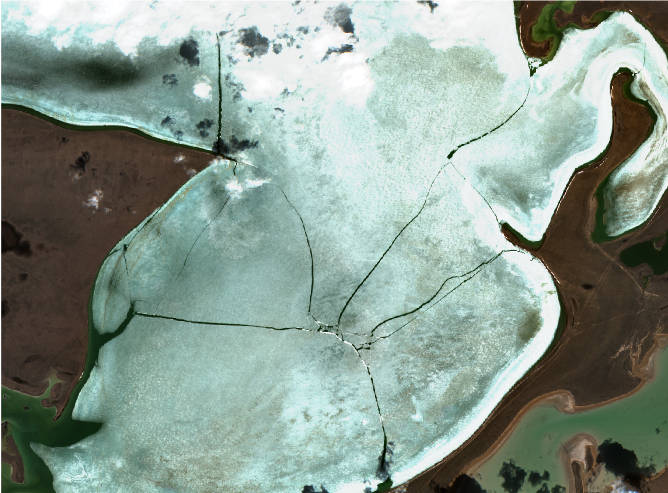
4. Ice break-up Ice break-up is an important hydrologic event with detriments, such as infrastructure damage and lost economic activity. Ice break-up is defined as a process with specific dates identifying key events between the onset of melt and the complete disappearance of ice.

5. Ice jam detection River ice controls the winter flow regime of rivers and compromises the operation of hydrometric stations, governs the water intake and discharge activities of municipalities and businesses. Particularly during spring break-up, ice can create jams and floods that endanger infrastructure such as bridges with large economic losses.

EO Clinic

This project was carried out in the framework of the EO Clinic, in partnership between ESA (European Space Agency), the Asian Development Bank (ADB).

The activity is carried out within the scope of the recent ADB Knowledge and support Technical Assistance (KSTA) focusing on streamlining the use of high-level technologies in Kazakhstan and aligned with the operational priorities for ADB country partnerships and the National Sustainable Development Strategy of Kazakhstan.

Earth Observation Centre of Excellence part of the DHI GROUP

info@dhigroup.com
+45 4516 9200

Agern Alle 5,
2970 Hørsholm,
Denmark

CVR: 36466871

WorldWater – Surface Water Dynamics

Why is it important?

Water is essential for life on Earth and a critical natural resource that underpins all social and economic activity. During the last century, water consumption has increased twice as fast as the world’s population, and today water scarcity affects more than 40 percent of people globally – a disturbing figure which is expected to rise if we do not change our habits and respond to climate change and future global warming. The need for proper and timely information on water (non-) availability is a critical requirement for water management activities.

The WorldWater - Surface Water Dynamics project aim to address the needs of authorities, at all levels, by developing EO tools and products to improve the ability of national and regional stakeholders to monitor the world’s inland water resources in both extent and volume.

Project highlights:

Developing robust and operational EO methods and tools for surface water dynamics monitoring, applicable at a global scale.

Integrating EO products and tools in a data analytics platform to foster the wider usage of EO data and surface water dynamics products for country and basin scale water resource monitoring and reporting

Building national capacities to better monitor and report on water resources using EO through user workshops, training courses and awareness events.

In more detail..

The dedicated goal on water in the 2030 agenda for sustainable development has brought a spotlight to water policy at global level and in national planning and representing a clear indication that countries worldwide recognises the ‘water crisis’, which has consistently been ranked by the World Economic Forum as one of the threats with the highest potential impact and likelihood. In fact, reality may have turned out faster than anticipated. Population growth, socioeconomic development and urbanization are all contributing to increased water demand, while climate change induced impacts on precipitation patterns and temperature extremes further exacerbate water resource availability and predictability. The Sustainable Development Goals (SDGs), especially the goal on ‘clean water for all’ (SDG 6) and the ‘climate action goal’ (SDG 13) therefore need all the attention they can get to avoid an accelerating ‘water crisis’ towards 2030.

The use of EO data for monitoring water resources is increasingly being recognized and accepted as a viable source of information for practitioners and decision-makers. Through the lens of Sustainable Development Goal (SDG) 6 and specific use case studies, the WorldWater - Surface Water Dynamics project will demonstrate how global coverage EO data can be used to systematically and accurately measure inland surface water resources. It will complement existing EO initiatives and projects (e.g. Global Surface Water Explore and the Copernicus global land services) by further developing EO tools and products to effectively use the most up to date, open and free satellite data, primarily from the Sentinel missions, for improved monitoring of the world’s inland water resources.

The project aim to enable national authorities and river basin organizations to apply EO data to independently monitor surface water dynamics at all scales in a robust way - thereby providing them with essential information for more evidence-based planning and management of water resources and an ability to efficiently report and act in response to the global water agenda.

DHI GRAS leads WorldWater in a consortium that also includes GeoVille GmbH (Austria), GISAT (Czech Republic), GRID-Arendal (Norway) and the technical university of Denmark (DTU).

European Space Agency:

The European Space Agency (ESA) is the European space programme and its mission is to explore Earth, its immediate space environment, our Solar System and the Universe.

ESA also works closely with space organisations outside Europe to develop satellite-based technologies and services, and to promote European industries.

Earth Observation Centre of Excellence part of the DHI GROUP

info@dhigroup.com
+45 4516 9200

Agern Alle 5,
2970 Hørsholm,
Denmark

CVR: 36466871

DK4HAPS

Why is it important?

As a future technology, HAPS platforms will open a new market for remote sensing and surveillance by offering disruptive and complementary applications to services enabled by satellites, terrestrial infrastructures and Remotely Piloted Aircraft Systems (RPAS), at relatively low cost. This project will explore uptake potential among stakeholders in Denmark and identify potential use case applications in a Danish context.

Project highlights:

Analysing and documenting opportunities for HAPS platforms to contribute to, and strengthen, the capacity of the Danish authorities to carry out surveillance and monitoring tasks, primarily in the field of defense and security.

Documenting existing HAPS technology gaps, to uncover industry needs and requirements, in order to leverage opportunities for Danish tech companies to contribute relevant technology that can support the development of HAPS platforms.

Provision of tailormade workshops focusing on HAPS application potential and opportunities, to connect industry leaders and relevant stakeholders in the uptake community and explore relevant use case scenarios in Denmark.

In more detail..

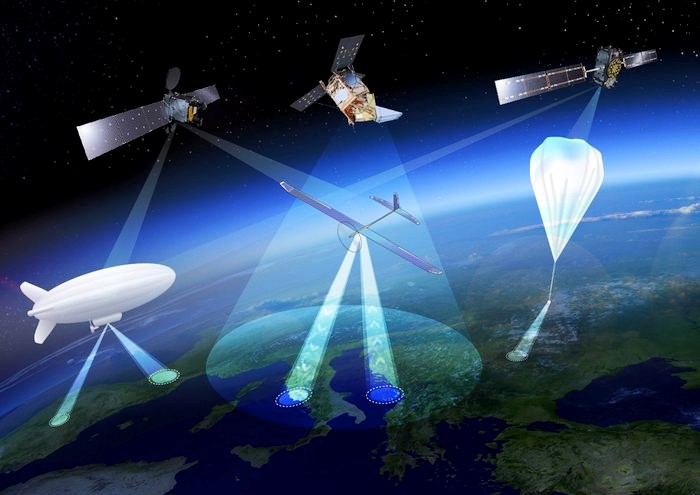
High Altitude Pseudo Satellites (HAPS) are geostationary or quasi-stationary stratospheric platforms that provide a link between the capabilities of satellites, UAVs and aircrafts. Positioned in the lower stratosphere, at a height of just over 20 km, they are close enough to the earth to provide high spatial resolution video and image data and at a distance far enough to uncover large land and ocean areas, continuously and in near real time.

They are ideally positioned to complement and expand the capabilities of satellites in earth observation, telecommunications and navigation and provide time-critical and permanent monitoring and communication solutions at relatively low cost.

Therefore, in the near future, HAPS platforms are expected to open up a new market for remote monitoring, enabling a time-critical and satellite-like monitoring that can support and contribute to several state and private applications and surveillance missions in defense and security, including patrol in Arctic, ship and air traffic monitoring, border patrol, etc.

This project aims to define the specific need for HAPS-based monitoring solutions in Denmark and at the same time identify opportunities for Danish technology companies to contribute relevant technology that can support the development of HAPS solutions, including the development of miniaturized sensors and communication systems.

Center for Defence, Space & Security:

The Center for Defence, Space & Security (CenSec) is the prime Danish cluster for small and medium-sized enterprises specializing in high tech industries like defence, homeland security, space, aerospace, railway and maritime.

CenSec was founded in 2004 and established in 2007 as an industrial cluster. In 2018, CenSec was approved by the Danish Ministry of Higher Education and Science to also become a national Innovation Network for Security (Inno-Sec)

Earth Observation Centre of Excellence part of the DHI GROUP

info@dhigroup.com
+45 4516 9200

Agern Alle 5,
2970 Hørsholm,
Denmark

CVR: 36466871

Global Seas

Why is it important?

High-quality and reliable data on past, present and predicted conditions of various metocean parameters is essential in order to reduce fuel consumption, lower emissions and improve fleet management capacity in the shipping industry. DHI’s Global Seas will deliver hourly information on ocean current, wave and wind data one-year back and five days ahead in time, globally, through a series of accurate regional ocean current models assimilated by satellite data input.

Project highlights:

Providing global-local high-quality ocean surface current data achieved by combining earth observation and modelling techniques in a semi-automated downscaling approach

Covering a wide range of metocean parameters with expert assessment of quality and only including sufficiently reliable data.

Ensuring flexibility, easy and efficient access to the data exactly where the information is needed in the workflow of the end-users. This includes exploiting the increased bandwidth expected from sitcom and GPS positioning of vessels typically communicated via AIS.

In more detail..

Global Seas will deliver earth observation enriched high-quality data on ocean currents and other valuable metocean data tailored for application in the shipping sector with the purpose of making shipping more fuel efficient and ensure better management of the fleets.

The value creation will come from reduced fuel consumption, lower emissions and improved fleet management capacity. This is typically obtained by the shipping companies directly, by route optimization and fuel optimization service providers and by the vessel navigators and captains.The decisions made by the various players are complex on their own, but rely on the quality of past, present and predicted conditions of ocean currents, wind, waves, water level, sea temperature, salinity and other metocean conditions.

Global Seas focuses on generating value by providing easy and efficient access to current and other metocean high-quality data and estimating the accuracy of the data provided. This solution relies most heavily on altimetry-based sea surface height products combined with DHI’s world leading hydrodynamic models. Sea surface observations are used both for continually updating the tidal water level and current products, and it is the most important satellite observation for constraining mesoscale dynamics.

While emphasis is on ocean currents, the product will also integrate sea surface temperature (SST, from e.g. Sentinel 3A and 3B SLSTR), scatterometer surface wind speed data (from e.g. ASCAT, RapidScat), wave height and wind speed from altimetry

European Space Agency:

The European Space Agency (ESA) is the European space programme and its mission is to explore Earth, its immediate space environment, our Solar System and the Universe.

ESA also works closely with space organisations outside Europe to develop satellite-based technologies and services, and to promote European industries.

Earth Observation Centre of Excellence part of the DHI GROUP

info@dhigroup.com
+45 4516 9200

Agern Alle 5,
2970 Hørsholm,
Denmark

CVR: 36466871

Monitoring & Assessment of Climate Change Impact on Geomorphology in the Coastal Areas of Bangladesh

Why is it important?

The vulnerability of the coastal population in Bangladesh is on the rise due to climate change. In order to identify and adopt best practice measures to increase the resilience of the coastal population to natural disasters and climate change, it is critical to assess and understand the changes and dynamics of the coastal zone. This project aims to build sustainable capacity among technical staff as well as decision makers to utilize modern satellite-based techniques to monitor climate change challenges and to provide early warning in the coastal zone of Bangladesh

Project highlights:

Providing a detailed baseline of existing GIS and earth observation data handling capacities among key stakeholders in Bangladesh

Capacity building within the use of satellite imagery for effective, systematic and routinely monitoring of coastal areas in Bangladesh with a view to assess climate change impacts.

Provision of on-site tailormade technical workshops focusing on application of EO techniques and coupled local field surveys.

In more detail..

The project is intended to establish methodological guidelines and step-by-step workflows for Earth Observation based assessments of coastal zone dynamics in Bangladesh, and train staff in developing early warning capacity for bank erosion attacks, which is one of the most significant risks from climate change.

Furthermore, the EO based workflows will allow stakeholders to increase the general understanding of the morphological processes in the coastal zone of Bangladesh and the impacts of climate change on these processes.

The project will contribute significantly to develop the technical ability of key stakeholders within relevant government agencies in Bangladesh, to conduct time-critical analysis of erosion/accretion processes and assessments of climate change impacts using advanced remote sensing methods.

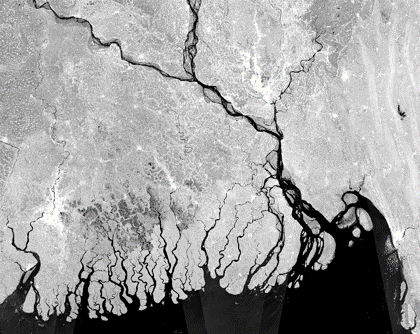
Long term linear regression - indicates areas that are getting wetter (blue) or drier (red)
Fractional water coverage

Climate Technology Centre and Network:

The Climate Technology Centre and Network (CTCN) is the operational arm of the UNFCCC Technology Mechanism, hosted by the UN Environment Programme and the UN Industrial Development Organization (UNIDO). The Centre promotes the accelerated transfer of environmentally sound technologies for low carbon and climate resilient development at the request of developing countries.

Earth Observation Centre of Excellence part of the DHI GROUP

info@dhigroup.com
+45 4516 9200

Agern Alle 5,
2970 Hørsholm,
Denmark

CVR: 36466871

H2020 CEASELESS

Why is it important?

The requirements from end-users and the wide range of applications underpin how crucial the development of oceanographic products is.

The H2020 CEASELESS project is contributing to a better understanding and prediction of coastal oceanography based on developments in satellite and in-situ data as well as high resolution models and novel assimilation approaches.

Project highlights:

Application of new Sentinel data to extract a spatial structure for coastal processes

Application of met-ocean predictions for users as a proof of concept for the new prediction capabilities, highlighting application limits and providing feedback for further developing their coastal dimension

New higher resolution and prediction capabilities for met-ocean variables, to allow for coupling and assimilation at unprecedented scales

In more detail..

The new Sentinel data, together with existing satellite measurements, are supporting a much needed spatial structure to complement the temporal variability captured by in-situ timeseries.

The CEASELESS project has applied the new Sentinel data to selected pilot sites to allow for efficient testing of unstructured grids to better capture coastline irregularities and sea bed geometry and forms.

The pilot sites will allow for more efficient analysis approaches globally, and more specifically in the North Sea and Mediterranean Sea. This serves as proof of concept for the role that coastal processes play in the meteo-oceanographic predictions and the importance of combining in-situ data with satellite measurements for restricted coastal domains.

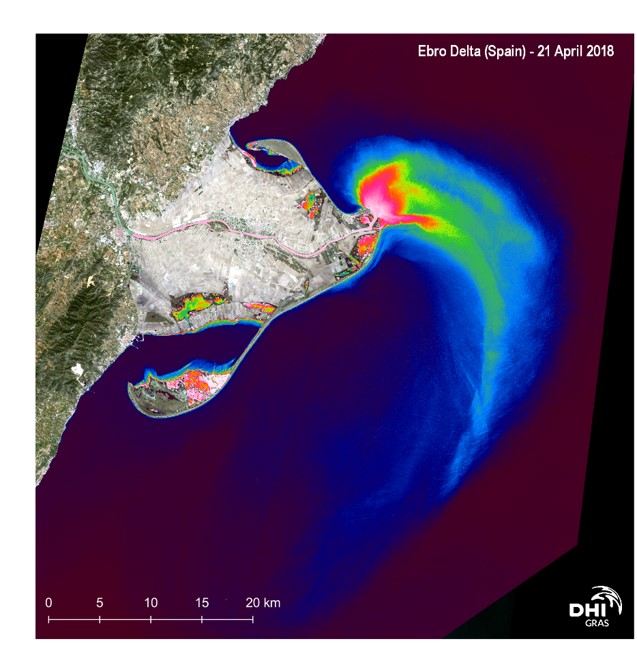
In CEASELESS, DHI GRAS is acting as the optical remote sensing expert providing Sentinel-2 based satellite-derived bathymetry , water quality data and information on coastal dynamics. Tied up in a cloud-based processing environment a truly scalable approach has been designed capable of delivery of large-scale coverage globally.

Suspended matter
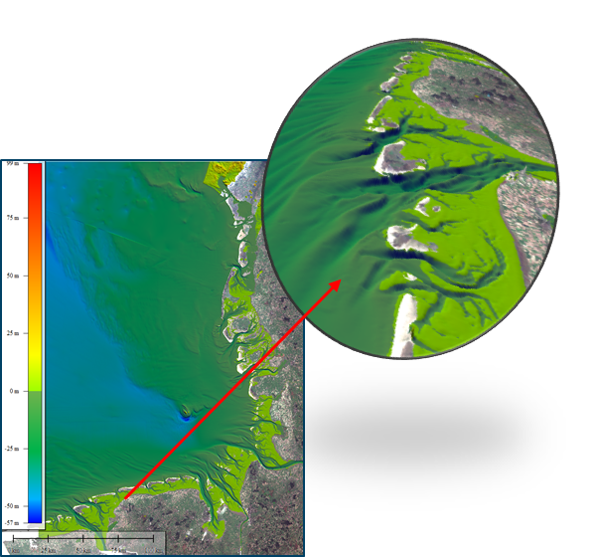
Satellite derived Bathymetry, German Bight
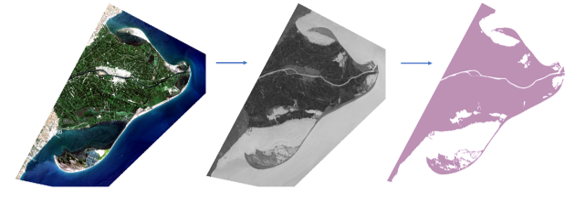
Showing the workflows from input imagery to derived index to a final vectorized coastline

European Commission:

CEASELESS is funded by the European Union’s H2020 Programme for Research, Technological Development and Demonstration under Grant Agreement No: H2020-EO-2016-730030- CEASELESS.

H2020 is the biggest EU Research and Innovation programme and a financial instrument aimed at securing Europe’s global competitiveness by driving economic growth and focusing on research as an investment for the future of Europe.

Earth Observation Centre of Excellence part of the DHI GROUP

info@dhigroup.com
+45 4516 9200

Agern Alle 5,
2970 Hørsholm,
Denmark

CVR: 36466871