
MCSAV – Satellite‑based mapping and monitoring of coastal ecosystems at scale (Malaysia)
MCSAV is a satellite‑based, cloud‑hosted system that uses Copernicus Sentinel‑2 imagery and machine learning to map and monitor coastal ecosystems at scale in tropical waters, supporting area‑based marine management and MPAs.
Why is it important?
Reliable information on the distribution and condition of coastal and marine ecosystems is essential for sustainable management of marine resources. Habitats such as mangroves, coral reefs, and submerged aquatic vegetation play a critical role in biodiversity, fisheries, and coastal protection, yet they are often difficult to monitor consistently using traditional field‑based surveys alone. In tropical coastal regions, monitoring is further challenged by large geographic extents, limited access, and high costs, which can result in fragmented or outdated information. Satellite Earth observation offers a way to overcome these limitations by providing regular, large‑area coverage that can be repeated over time. Mangroves, Corals, Submerged Aquatic Vegetation (MCSAV) addresses this gap by using satellite data to support cost‑effective, scalable, and repeatable monitoring of coastal ecosystems. By making satellite‑derived information accessible through a web‑based platform, the project supports evidence‑based marine management, helps inform area‑based protection and planning, and contributes to more sustainable use of coastal and marine resources.
Project highlights:
In more detail..
Mangroves, Corals, Submerged Aquatic Vegetation (MCSAV) aims to make large‑scale coastal and marine ecosystem monitoring possible using satellite Earth observation. Important marine habitats such as mangroves, coral reefs, and submerged aquatic vegetation are often difficult to survey consistently using field‑based methods alone, especially in regions where access is limited and monitoring resources are constrained.
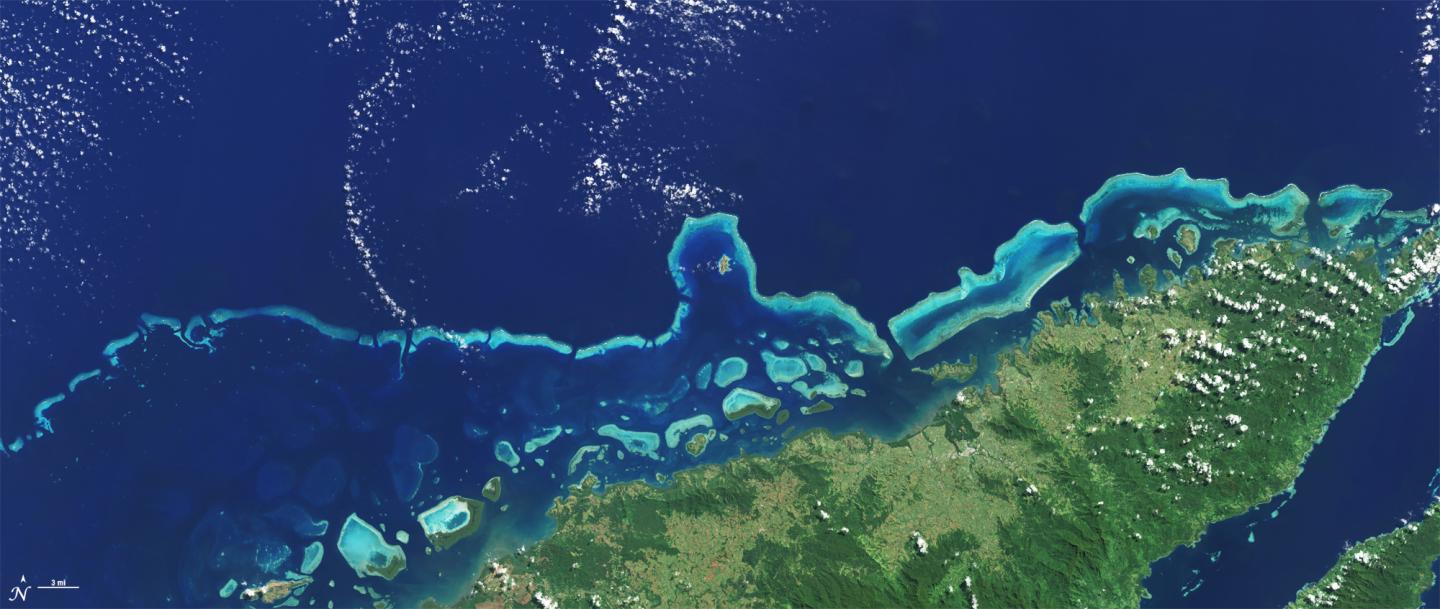
The project uses data from the Copernicus Sentinel‑2 satellites, which provide frequent, freely available imagery suitable for mapping shallow coastal environments across large areas. Satellite images are analysed using automated image analysis and machine‑learning techniques, making it possible to generate repeatable habitat maps and to monitor changes over time.
MCSAV was developed by DHI together with partners and collaborators, including Reef Check Malaysia and Stop Fish Bombing Malaysia, as part of the 3rd Call of the UNDP Ocean Innovation Challenge.
The project combines technical Earth‑observation expertise with local knowledge to ensure that the resulting information is both scientifically robust and relevant for practical use.
A key feature of MCSAV is its delivery through a web‑based platform designed for a broad range of users, including authorities, planners, NGOs, and local stakeholders. The platform allows users to explore habitat maps, visualise changes over time, and use the results as input to marine management, conservation planning, and area‑based protection initiatives.< Overall, MCSAV demonstrates how satellite data can be transformed into accessible, decision‑ready information, supporting more effective marine ecosystem management and contributing to sustainable use of coastal and marine resources in line with broader blue‑economy and conservation objectives.